Awareness Is the Only Defense: How to Read Behavioral Signals Without Becoming Paranoid or Cynical
- Mar 25
- 3 min read

The Problem With Blind Trust And With Constant Suspicion
We live in a strange psychological split.
On one side, we are taught to trust appearances: Calm voices. Polished speech. Professional composure. Reassuring smiles.
On the other, we are warned to be careful, to stay alert, to “read between the lines.”
Most people swing between these extremes:
Blind trust → followed by betrayal
Hypervigilance → followed by exhaustion and cynicism
Neither is healthy.Neither is intelligent.
True awareness lives somewhere quieter and far more precise.
Awareness Is Not Suspicion
Awareness does not mean assuming danger everywhere. It does not mean labeling people. It does not mean becoming cold, guarded, or fearful.
Awareness is simply the ability to notice without panic.
It is the skill of perceiving patterns, not judging personalities.
As a music psychologist, I often explain it this way:
You don’t accuse a note of being “wrong.”You simply hear when it’s out of tune.
The Nervous System Is Always Listening
Before the mind analyzes, the nervous system registers.
It notices:
Rhythm inconsistencies
Emotional-flat speech in emotional contexts
Over controlled tone where flexibility is expected
Mismatch between words and physiological expression
This happens automatically. You don’t have to train it only to stop ignoring it.
Most people feel these signals first as:
Subtle discomfort
“Something feels off”
Unease without explanation
And then they override it with logic, politeness, or social conditioning.
Why We Were Taught Not to Trust Ourselves
From a young age, many of us were trained to:
Ignore discomfort to appear respectful
Doubt intuition to appear rational
Silence bodily signals to appear agreeable
Especially in elite, professional, or intellectual spaces, we are rewarded for appearing calm, not for being perceptive.
But calm is not the same as safe.Confidence is not the same as coherence.Articulation is not the same as integrity.
Reading Signals Without Creating Fear
Behavioral awareness becomes dangerous only when it turns into projection.
The difference is subtle but crucial:
Awareness observes patterns over time
Paranoia jumps to conclusions instantly
Awareness asks:
Does this behavior repeat?
Is the rhythm consistently misaligned?
Do words, tone, and context harmonize or conflict?
Paranoia declares:
This means something bad
This person must be dangerous
One is scientific.The other is emotional overload.
The Role of Music Psychology in Behavioral Reading
Music psychology trains us to understand something most disciplines miss:
Sound is behavior.
Not metaphorically.Biologically.
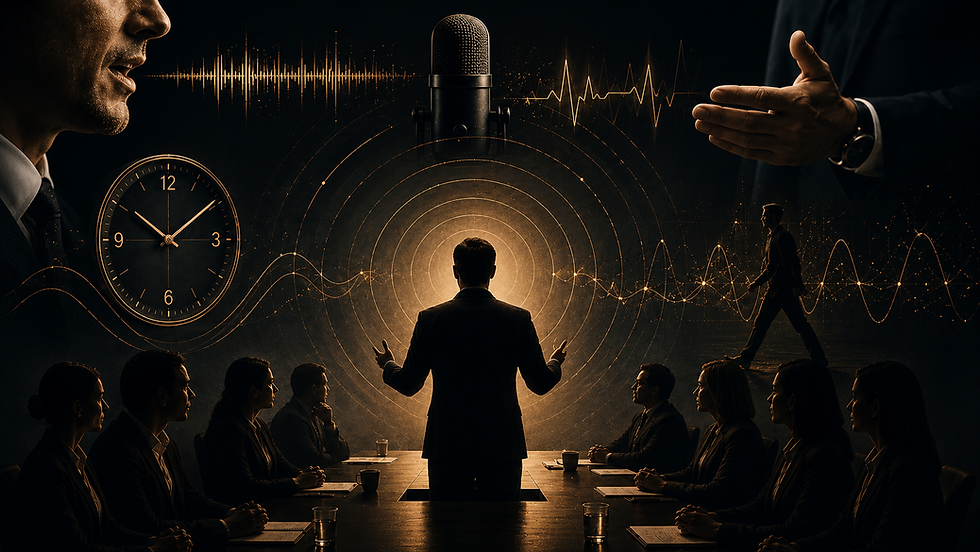
Tone, tempo, rhythm, pauses, breath these are regulated by the nervous system, not by intention alone.
You can rehearse words. You can polish narratives.But rhythm leaks truth.
That is why listening deeply is not about suspicion it is about literacy.
Just as reading body language doesn’t make you judgmental, reading sound doesn’t make you cynical.
It makes you informed.
Awareness Protects Without Hardening
The goal of awareness is not to withdraw from people.
It is to:
Choose more consciously
Engage more wisely
Pause instead of rationalizing discomfort
Respond instead of reacting
Awareness allows warmth with boundaries.Empathy without self-betrayal.Openness without naivety.
This is emotional intelligence at its most mature form.
Why This Series Exists
This series was never about exposing individuals. It was about exposing patterns.
Patterns that repeat across:
Leadership
Power
Relationships
Media
Institutions
Predators will always exist.Manipulators will always adapt.
Awareness is the only defense that evolves with them.
A Final Note And a Responsibility
With awareness comes responsibility.
Not to accuse.Not to diagnose.Not to sensationalize.
But to listen more carefully. To trust the nervous system without becoming ruled by fear. To stay perceptive without losing compassion.
The most dangerous people are not always loud.And the safest people are not always calm.
Learning the difference is not paranoia. It is maturity.
Stay tuned for more in this series.The unexpected is still left to be explored.
About the Author
Dr. Shveata Mishra is a pioneering Music Psychologist, Neuro-Acoustics and Behavioral Aesthetic Expert whose work explores how rhythm, sound, and sensory perception shape trust, authority, and human judgment. Holding a PhD in Mystical Reflection of Music on Personality and Behavior, her research bridges ancient rhythmic intelligence with modern behavioral science. Through her original Behavioral Audit framework, Dr. Mishra examines how the body communicates truth beneath language offering tools for awareness without fear, and discernment without cynicism.


Comments