
Why We Trust Certain Voices Before They Say a Word

One word is enough for listeners to converge on trustworthiness and dominance. Why that instinct is fast, shared, confident, and frequently wrong.
Behavioral Aesthetics examines how presence is read: the way sound, composure, and style signal character before a word is spoken.
One word is enough for listeners to converge on trustworthiness and dominance. Why that instinct is fast, shared, confident, and frequently wrong.

Your eyes are a live readout of your nervous system. Here's what your eyes reveal about your inner state, and four science-backed ways to tune your gaze.
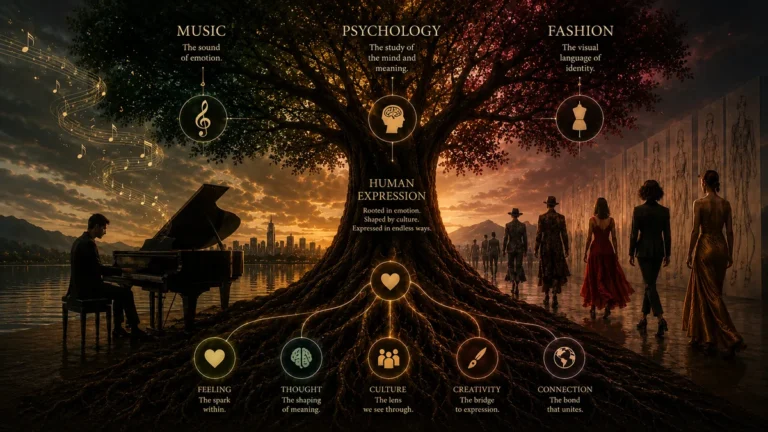
Music and fashion are two channels of one identity. A music psychologist examines how your playlist and your wardrobe signal, and shape, who you are.

Behavioral aesthetics examines how clothing, texture, color, and sound shape your mood, focus, and how the world perceives you, before a word is spoken.
A quiet place to begin
A research-informed listening practice designed to help your nervous system settle. Enter your email and I will send you the ritual as a PDF — along with new writing on sound, emotion, and identity whenever a new article is published.
People don’t just hear sound. They recognize themselves in it.