
Why Some People Withdraw When They Are Most Hurt

Withdrawal looks like rejection and almost never functions as rejection. Why shame drives it, why kindness intensifies it, and why pursuit backfires.

Withdrawal looks like rejection and almost never functions as rejection. Why shame drives it, why kindness intensifies it, and why pursuit backfires.
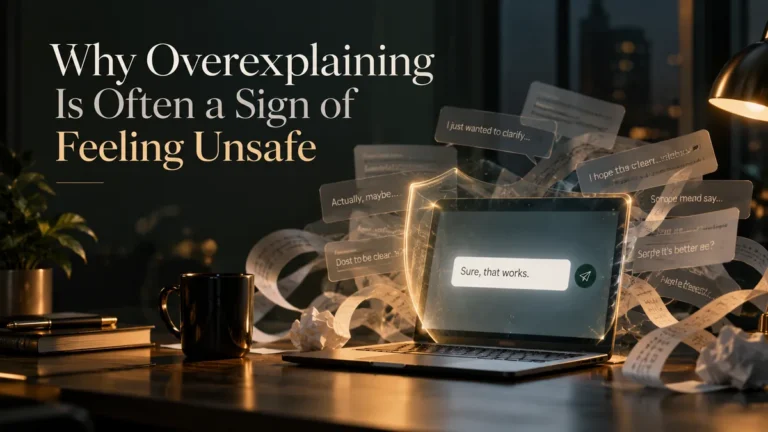
Overexplaining is anticipatory: you are pre-answering objections nobody raised. What that says about the audience in your head, and what it costs.

Nine compliments blur. One criticism arrives with the tone of voice attached. The negativity bias, its rough exchange rate, and how to correct for it.

A crowd is a sound before it is a room. Why loneliness tracks perceived isolation, not headcount, what your ears scan for, and why the noise wears you down.

One word is enough for listeners to converge on trustworthiness and dominance. Why that instinct is fast, shared, confident, and frequently wrong.

Almost all rejection arrives as sound: tone, timing, the warmth of a hello. Why the body reads that channel like injury, and what helps.

Refusing to apologize measurably raises self-esteem through power, control and integrity. Why going first stings, and what it actually costs to wait.

An argument keeps the connection open. Silence removes it and leaves the threat. The ostracism research, the flooding nuance, and the one sentence that helps.

It sounds like a compliment. Research links self-silencing to more frequent and more negative conflict, and to lower well-being for both partners.

People underestimate by half how likely others are to say yes. Why capable people still cannot ask, and what a well-formed request actually looks like.
A quiet place to begin
A research-informed listening practice designed to help your nervous system settle. Enter your email and I will send you the ritual as a PDF — along with new writing on sound, emotion, and identity whenever a new article is published.
People don’t just hear sound. They recognize themselves in it.