
Why Your Ears Never Fully Switch Off, Even While You Sleep
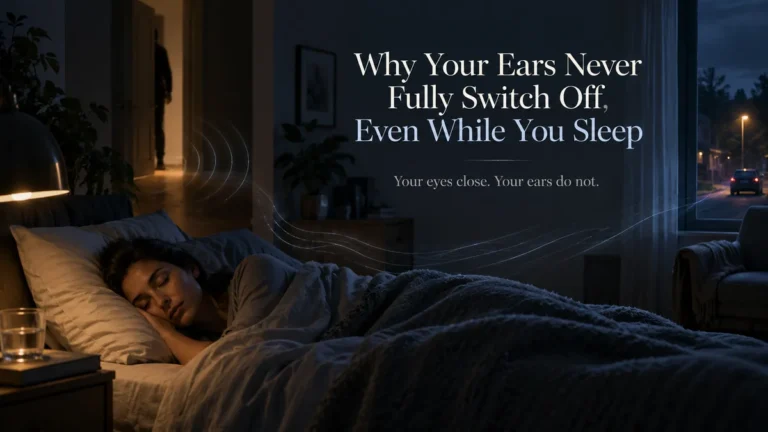
Your eyes have lids. Your ears do not. Inside the filter that keeps listening all night, sorts sound by meaning, and decides what is worth waking you for.

Your eyes have lids. Your ears do not. Inside the filter that keeps listening all night, sorts sound by meaning, and decides what is worth waking you for.

A cold room makes music sound thin, a warm one makes it rounder. The research on how temperature, humidity and room acoustics change what you hear.

Faster music lifts your pulse, slower music lowers it. The rhythmic-entrainment science of why your heartbeat tracks a song.

The tight jaw arrives before the thought. Why your nervous system registers stress in milliseconds, before your mind can name it.

Why a low hum settles your nervous system faster than a deliberate deep breath, and the vagus-nerve science behind it.
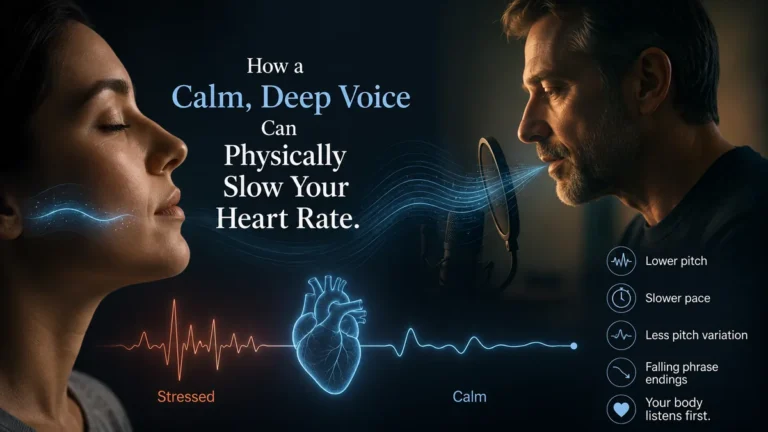
The research on pitch, prosody, and heart rate: what a calm deep voice does to the listening body, and how to use your own voice better.
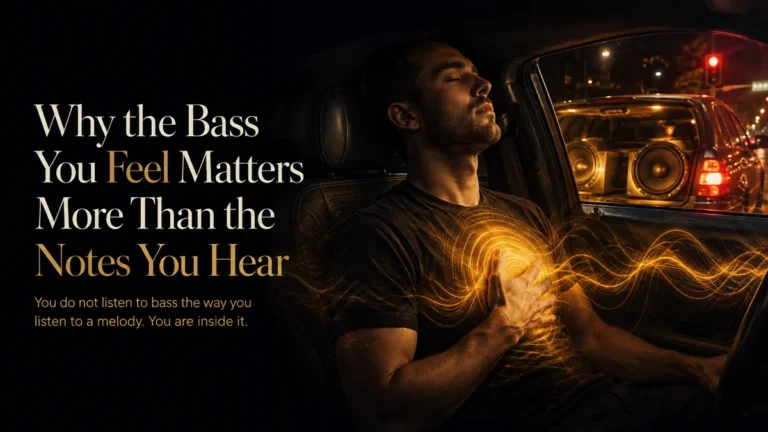
Why low frequencies reach you through skin, balance, and bone, and why the bass you feel shapes behaviour before the notes you hear do.
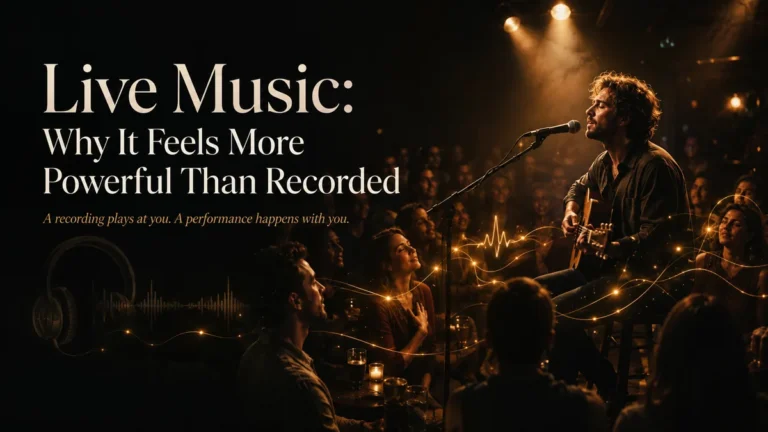
Live music is not a higher-fidelity recording. It is a different psychological event, and the research explains why it lands harder.
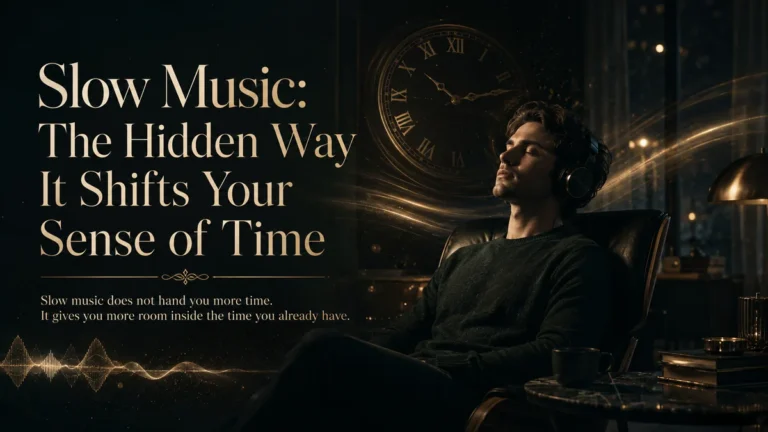
Slow music quietly rearranges your sense of time, and the research says something different from what most people assume.
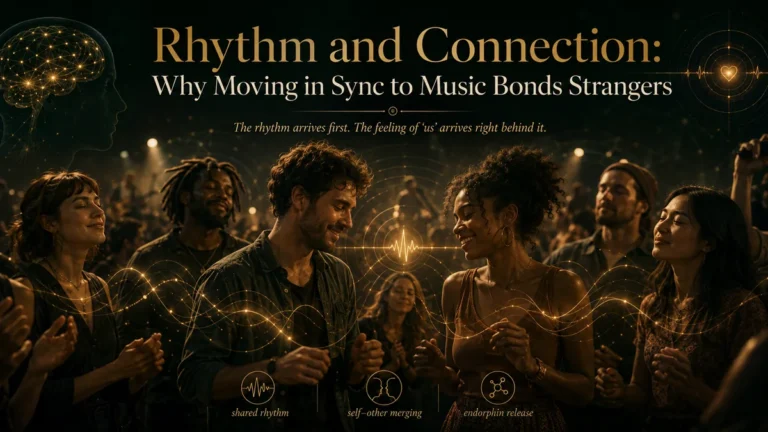
Why two people moving to the same beat end up trusting each other, and what interpersonal synchrony does to the brain, the body and the group.
A quiet place to begin
A research-informed listening practice designed to help your nervous system settle. Enter your email and I will send you the ritual as a PDF — along with new writing on sound, emotion, and identity whenever a new article is published.
People don’t just hear sound. They recognize themselves in it.