
Loud Chewing and Sensory Discomfort: When Everyday Sounds Feel Emotionally Overwhelming
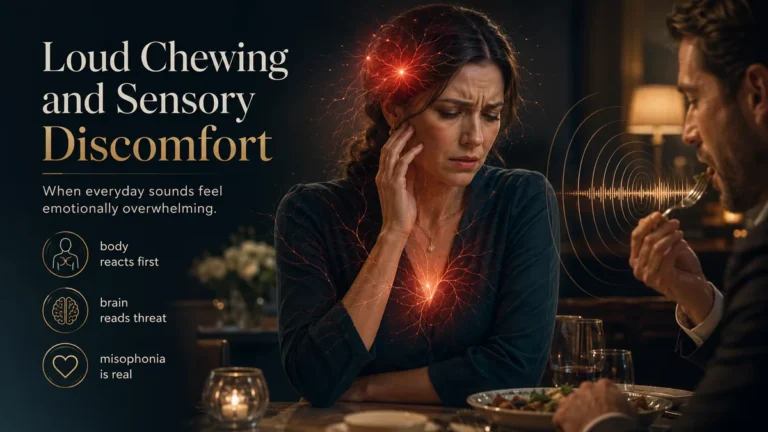
Why loud chewing and everyday sounds can feel emotionally overwhelming, the misophonia brain science behind it, and gentle ways to cope.
Music psychology examines why sound moves us before we can explain it. These articles look at how rhythm, voice, and melody shape emotion, memory, and identity.
Why loud chewing and everyday sounds can feel emotionally overwhelming, the misophonia brain science behind it, and gentle ways to cope.
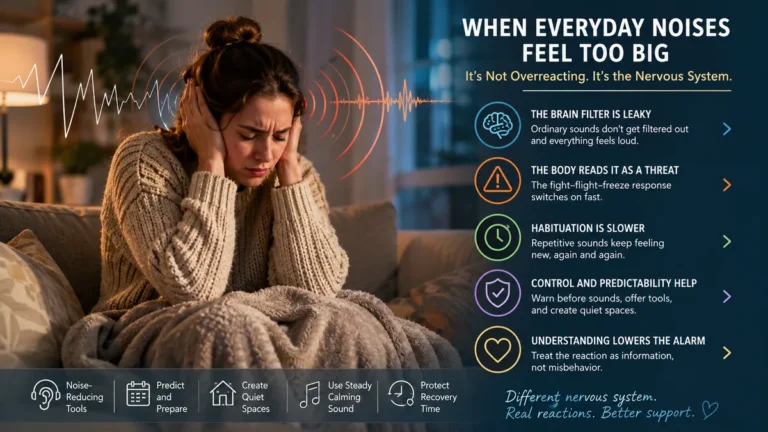
Why everyday noises overwhelm some children, what the nervous system is really doing, and how to help without forcing exposure.
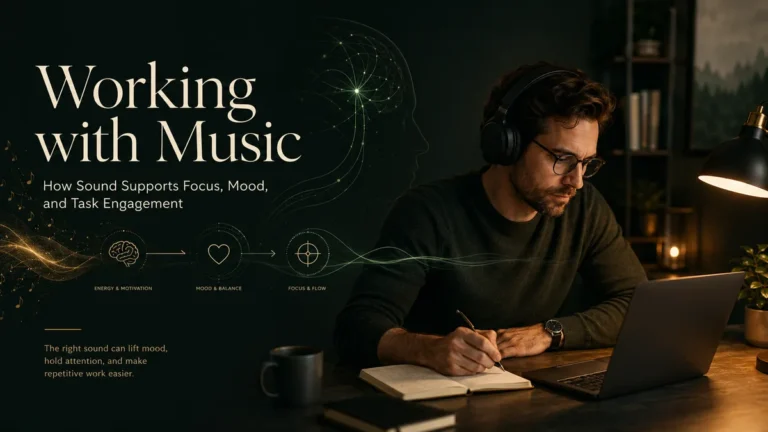
Music for focus works on your mood first. When sound helps, when lyrics hurt, and how to match music to the task.
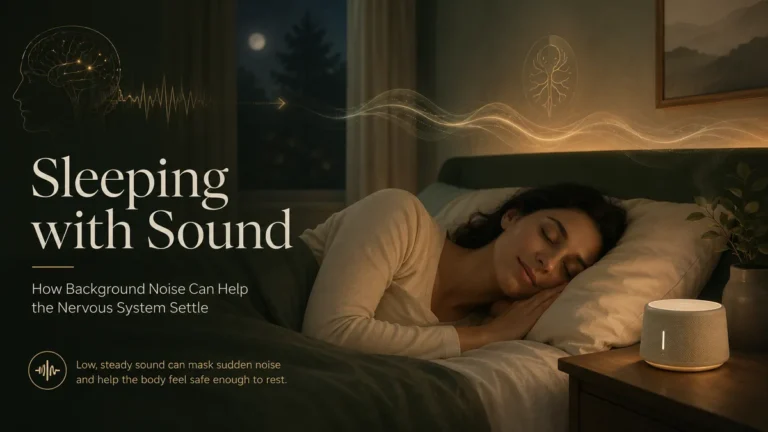
Why a too-quiet room keeps you up, and how sleeping with sound can help the nervous system settle, with the honest research on white and pink noise.
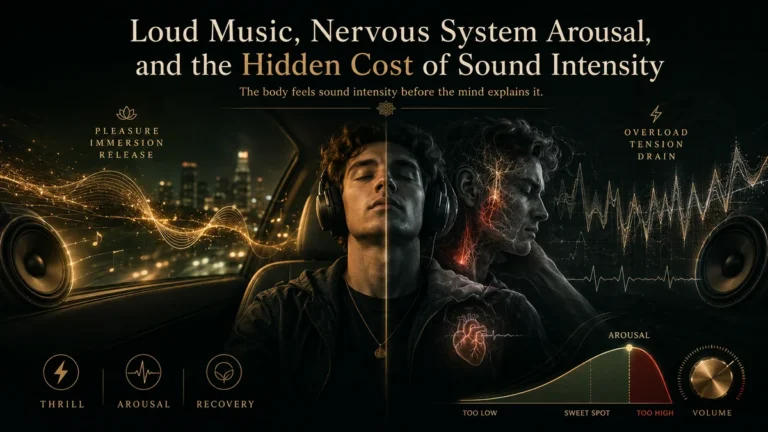
Loud music drives nervous system arousal before you decide you like it. What high volume costs your body, and how to keep the music you love.
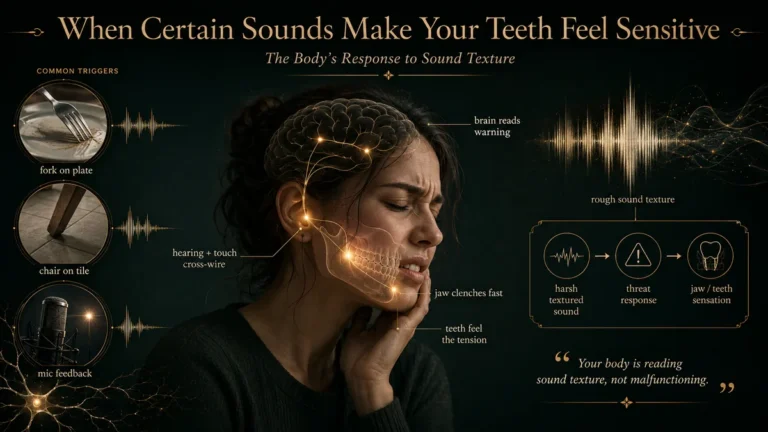
Certain sounds make your teeth feel sensitive because your body reads sound texture: roughness, a reflex jaw clench, and cross-wired hearing and touch.
Music does more than shape mood. It helps us recognize versions of ourselves through memory, culture, emotion, belonging, and change.
Silence feels difficult for many today because quiet removes the sound and stimulation we use to regulate attention, emotion, and identity.
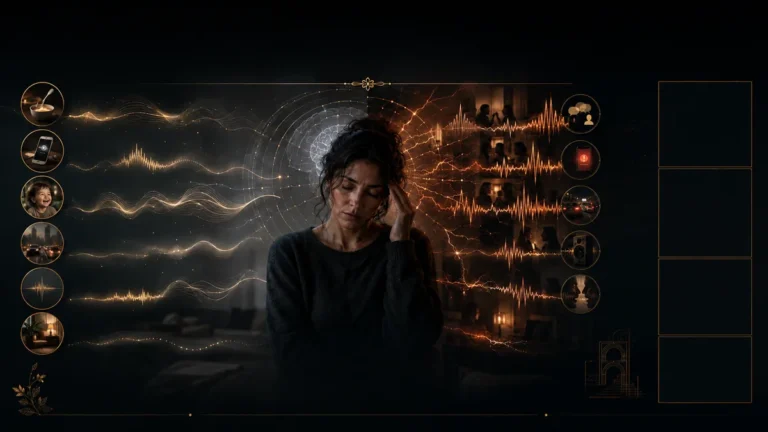
Emotional safety can take shape before we have words for it. This examines how tone, noise, music, and memory shape whether a place or person feels safe.
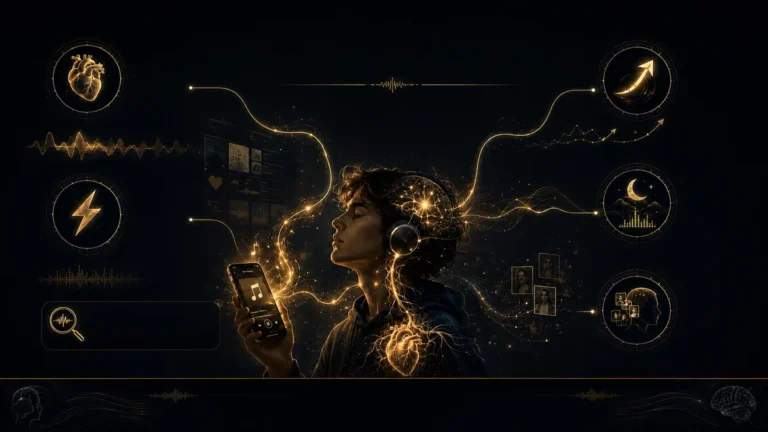
Your playlist is not a diagnosis, but it may reveal how you meet, move, contain, or make meaning of emotion through music.
A quiet place to begin
A research-informed listening practice designed to help your nervous system settle. Enter your email and I will send you the ritual as a PDF — along with new writing on sound, emotion, and identity whenever a new article is published.
People don’t just hear sound. They recognize themselves in it.