
The science,
made human.
Insights on music psychology, neuro-acoustics, sound, emotion, and identity, emotional regulation, and behavioural aesthetics. The music psychology blog of Dr. Shveata Mishra, examining how repeated sensory experience shapes behaviour. Start with the framework or about Dr. Shveata Mishra.
published
categories
writing
straight to you.
We’ll send a confirmation email first. No spam, unsubscribe any time.
From the Music Psychology Blog
Newest first-

Why We Trust Certain Voices Before They Say a Word
One word is enough for listeners to converge on trustworthiness and dominance. Why that instinct is fast, shared, confident, and frequently wrong.
-

Why Rejection Hurts: The Sound of Being Left Out
Almost all rejection arrives as sound: tone, timing, the warmth of a hello. Why the body reads that channel like injury, and what helps.
-

The Psychology of Why Apologizing First Feels Like Losing
Refusing to apologize measurably raises self-esteem through power, control and integrity. Why going first stings, and what it actually costs to wait.
-

Why Silence After a Conflict Hurts More Than the Argument
An argument keeps the connection open. Silence removes it and leaves the threat. The ostracism research, the flooding nuance, and the one sentence that…
-

The Hidden Cost of Being “Low Maintenance” in Relationships
It sounds like a compliment. Research links self-silencing to more frequent and more negative conflict, and to lower well-being for both partners.
-

The Psychology of Why Strong People Struggle to Ask for Help
People underestimate by half how likely others are to say yes. Why capable people still cannot ask, and what a well-formed request actually looks…
-
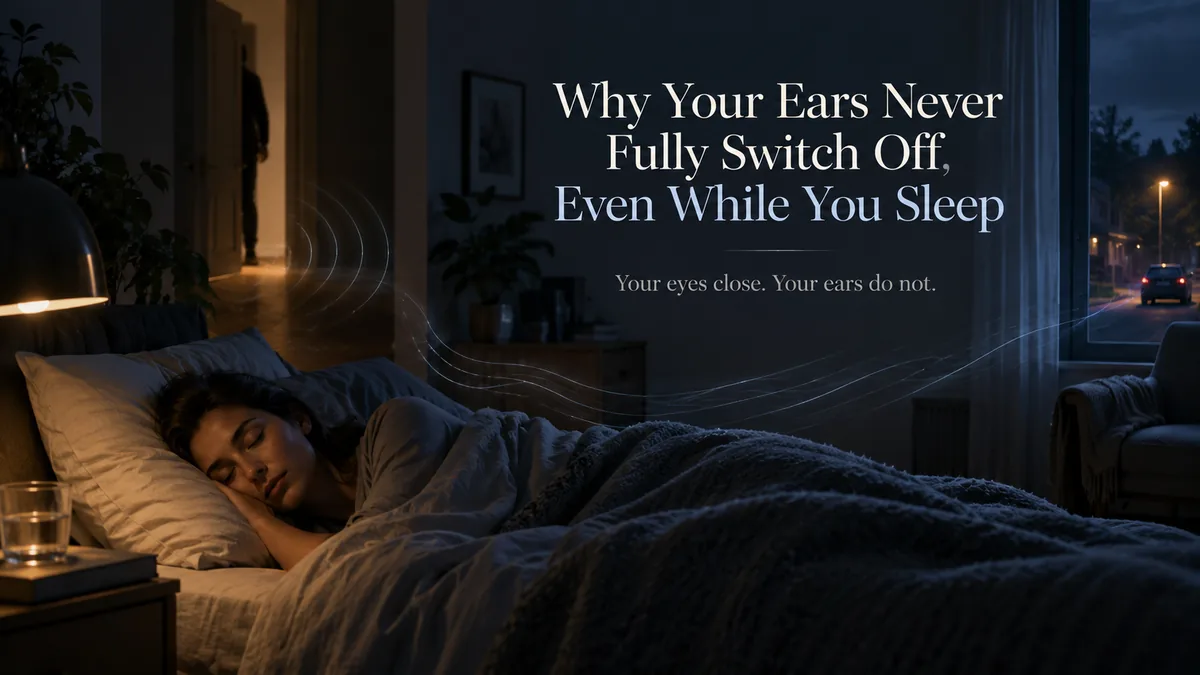
Why Your Ears Never Fully Switch Off, Even While You Sleep
Your eyes have lids. Your ears do not. Inside the filter that keeps listening all night, sorts sound by meaning, and decides what is…
-

How Temperature and Environment Change the Way You Feel Music
A cold room makes music sound thin, a warm one makes it rounder. The research on how temperature, humidity and room acoustics change what…
-

Rhythmic Entrainment: Why Your Heartbeat Syncs to Music
Faster music lifts your pulse, slower music lowers it. The rhythmic-entrainment science of why your heartbeat tracks a song.
-

Why Your Body Registers Stress Before Your Mind Does
The tight jaw arrives before the thought. Why your nervous system registers stress in milliseconds, before your mind can name it.
-

Why Humming Calms You Faster Than Deep Breathing (The Science)
Why a low hum settles your nervous system faster than a deliberate deep breath, and the vagus-nerve science behind it.
-
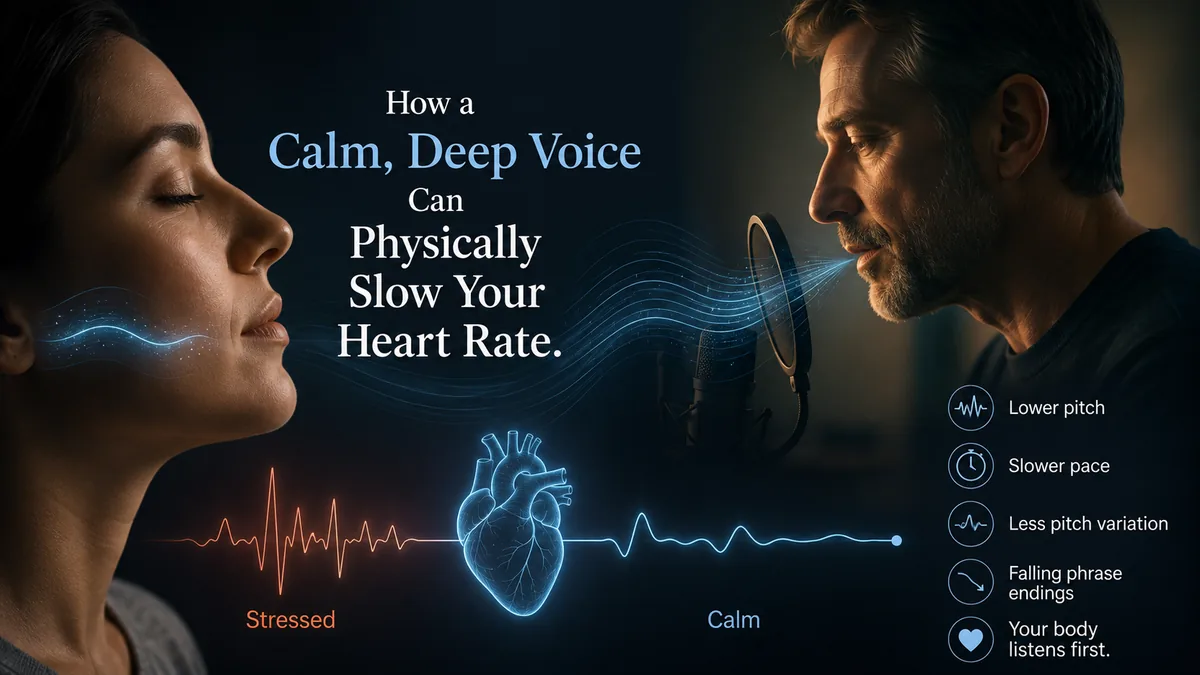
How a Calm, Deep Voice Can Physically Slow Your Heart Rate
The research on pitch, prosody, and heart rate: what a calm deep voice does to the listening body, and how to use your own…
-

Why the Bass You Feel Matters More Than the Notes You Hear
Why low frequencies reach you through skin, balance, and bone, and why the bass you feel shapes behaviour before the notes you hear do.
-

Live Music: Why It Feels More Powerful Than Recorded
Live music is not a higher-fidelity recording. It is a different psychological event, and the research explains why it lands harder.
-
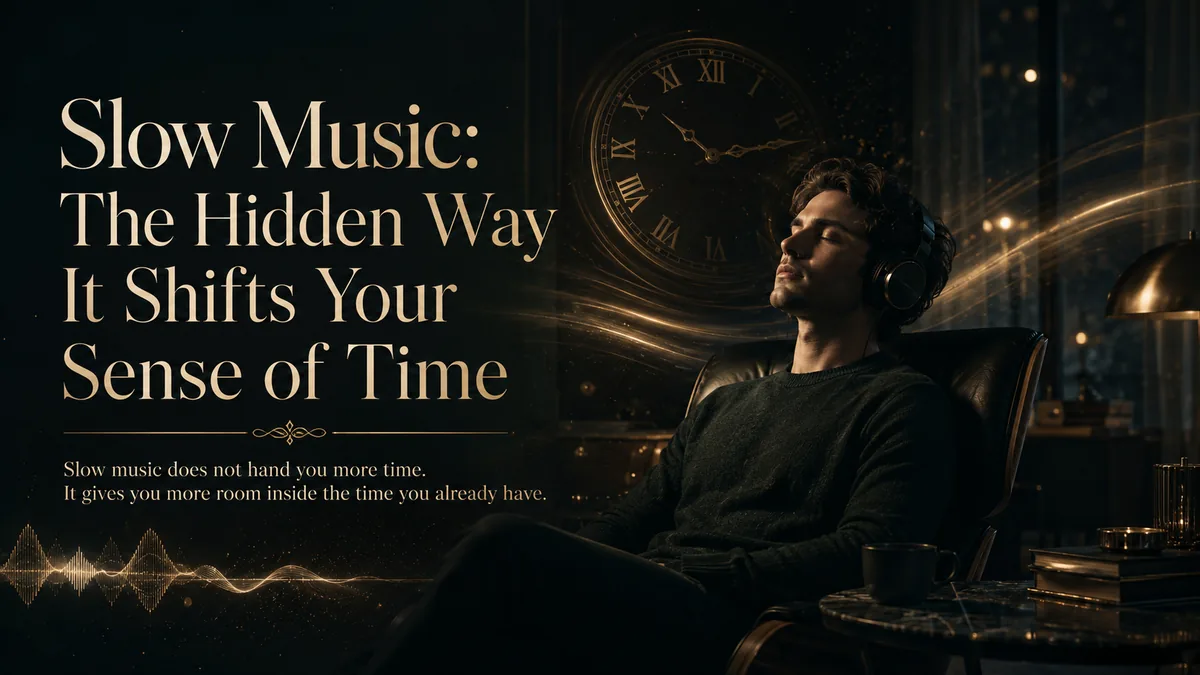
Slow Music: The Hidden Way It Shifts Your Sense of Time
Slow music quietly rearranges your sense of time, and the research says something different from what most people assume.
-
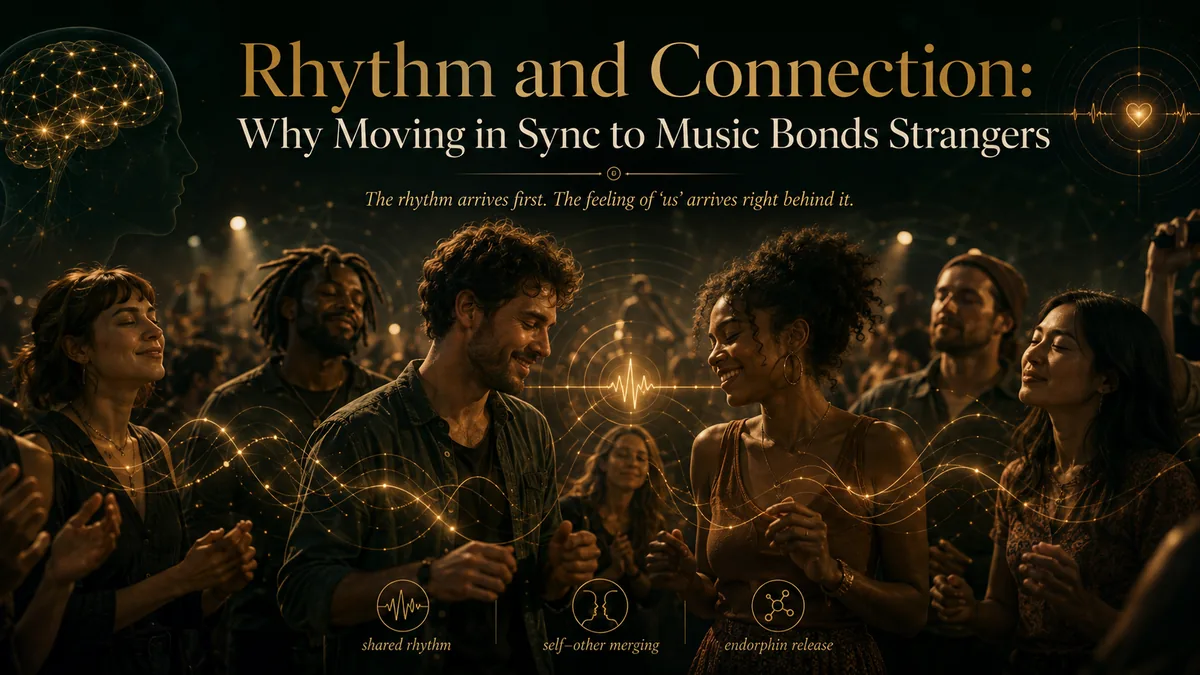
Rhythm and Connection: Why Moving in Sync to Music Bonds Strangers
Why two people moving to the same beat end up trusting each other, and what interpersonal synchrony does to the brain, the body and…
-

How the Brain Recognizes a Song in Less Than a Second
Why recognition arrives before the title does, and what the first half second of a familiar song is actually doing to you.
-
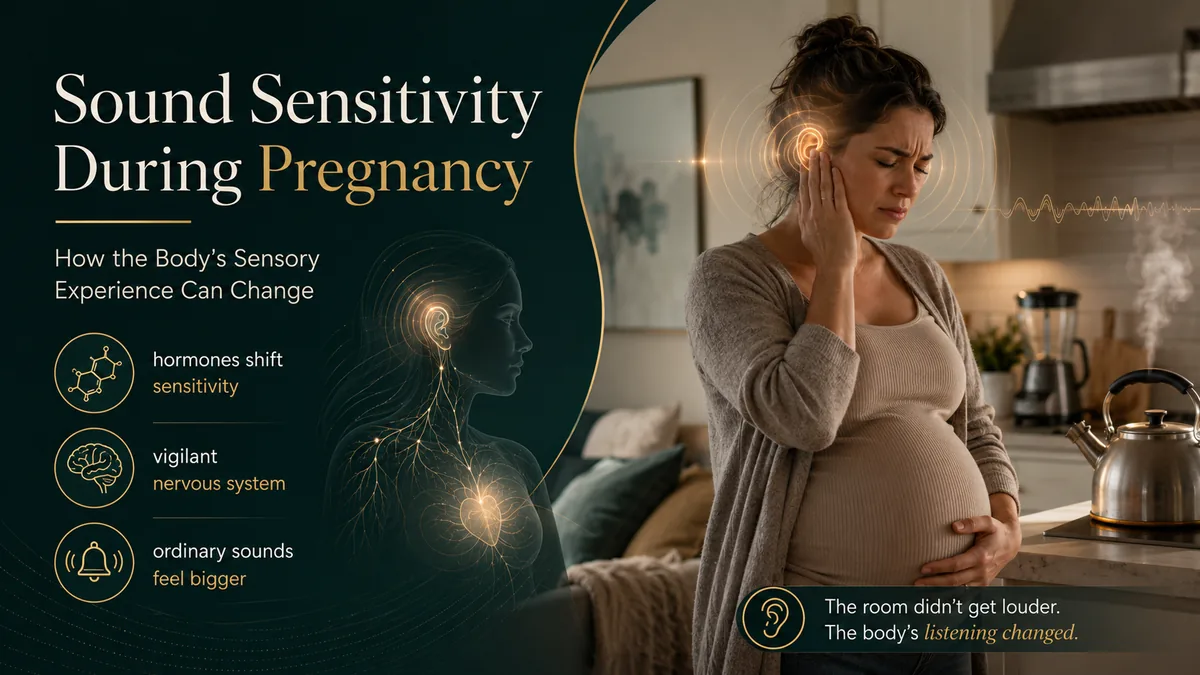
Sound Sensitivity During Pregnancy: How the Body’s Sensory Experience Can Change
Why ordinary noise can feel louder and sharper in pregnancy, and what actually helps the heightened listening ease.
-

Loud Chewing and Sensory Discomfort: When Everyday Sounds Feel Emotionally Overwhelming
Why loud chewing and everyday sounds can feel emotionally overwhelming, the misophonia brain science behind it, and gentle ways to cope.
-
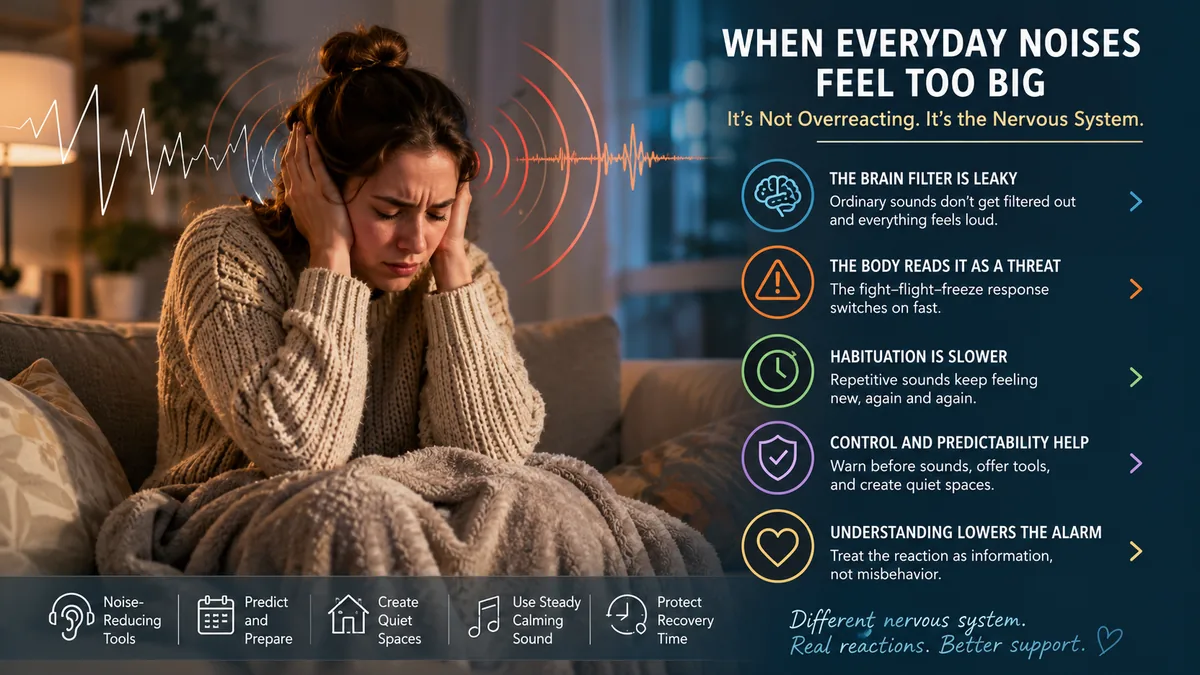
Children and Sound Sensitivity: When Everyday Noises Feel Too Big for the Nervous System
Why everyday noises overwhelm some children, what the nervous system is really doing, and how to help without forcing exposure.
-
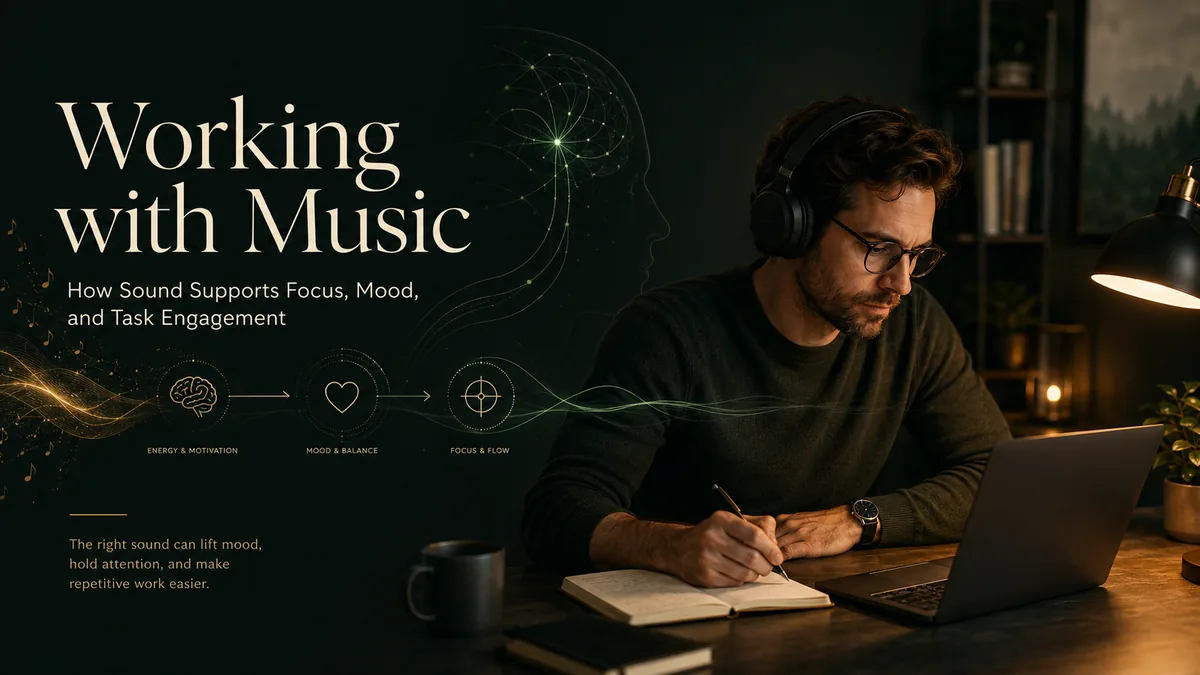
Working with Music: How Sound Supports Focus, Mood, and Task Engagement
Music for focus works on your mood first. When sound helps, when lyrics hurt, and how to match music to the task.
-
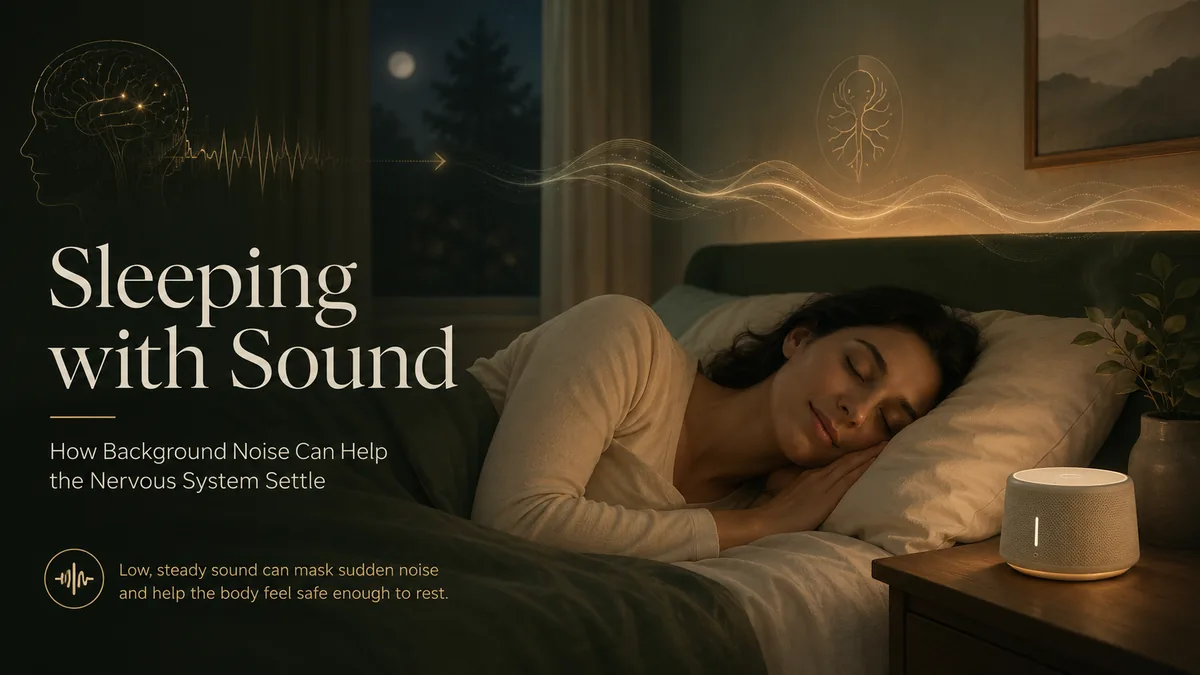
Sleeping with Sound: How Background Noise Can Help the Nervous System Settle
Why a too-quiet room keeps you up, and how sleeping with sound can help the nervous system settle, with the honest research on white…
-
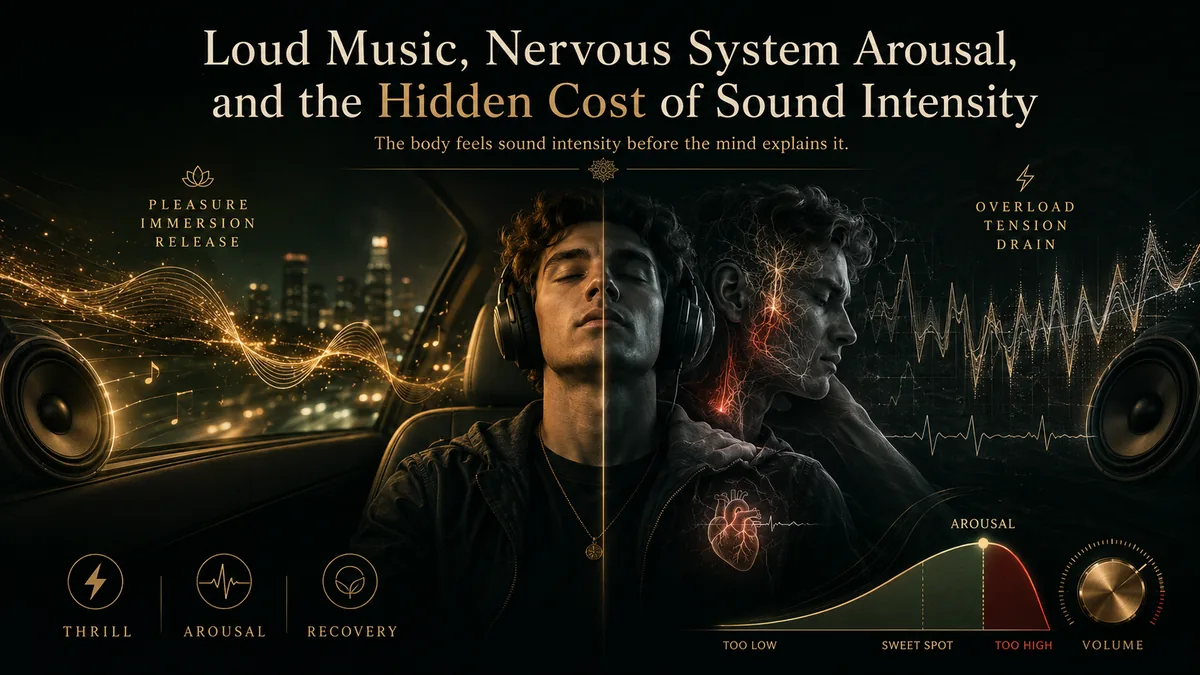
Loud Music, Nervous System Arousal, and the Hidden Cost of Sound Intensity
Loud music drives nervous system arousal before you decide you like it. What high volume costs your body, and how to keep the music…
-
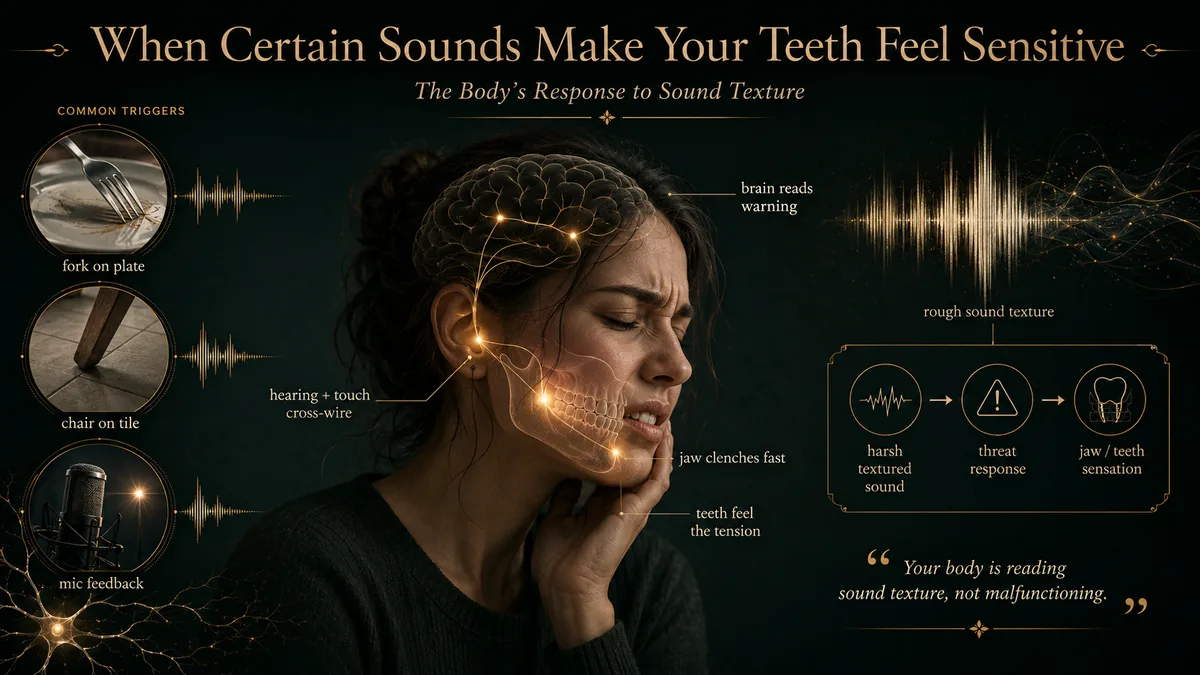
When Certain Sounds Make Your Teeth Feel Sensitive: The Body’s Response to Sound Texture
Certain sounds make your teeth feel sensitive because your body reads sound texture: roughness, a reflex jaw clench, and cross-wired hearing and touch.
-

The Unseen Relationship Between Music and Self-Identity
Music does more than shape mood. It helps us recognize versions of ourselves through memory, culture, emotion, belonging, and change.
-

The Hidden Psychology of Why Silence Feels Difficult Today
Silence feels difficult for many today because quiet removes the sound and stimulation we use to regulate attention, emotion, and identity.
-

Depression Is Not Always Sadness: The Quiet Shutdown of the Nervous System
Depression does not always arrive as crying. Sometimes it arrives as a quiet loss of access to energy, pleasure, music, connection, and self.
-

How Sound Shapes Emotional Safety Before We Realize It
Emotional safety can take shape before we have words for it. This examines how tone, noise, music, and memory shape whether a place or…
-

Why Emotional Exhaustion Changes the Way You Hear the World
Emotional exhaustion can raise sound sensitivity, so ordinary noise feels like a demand. Here is the science, and gentle ways to protect your attention.
-

Why Your Playlist May Reveal Your Emotional Regulation Style
Your playlist is not a diagnosis, but it may reveal how you meet, move, contain, or make meaning of emotion through music.